Mannanase Enzyme in Poultry Feed: How to Use Mannanase in Animal Feed Formulations
Formulate poultry feed with mannanase enzyme: dosage ranges, pH/temperature fit, QC, COA/TDS/SDS review, pilot validation, and supplier checks.
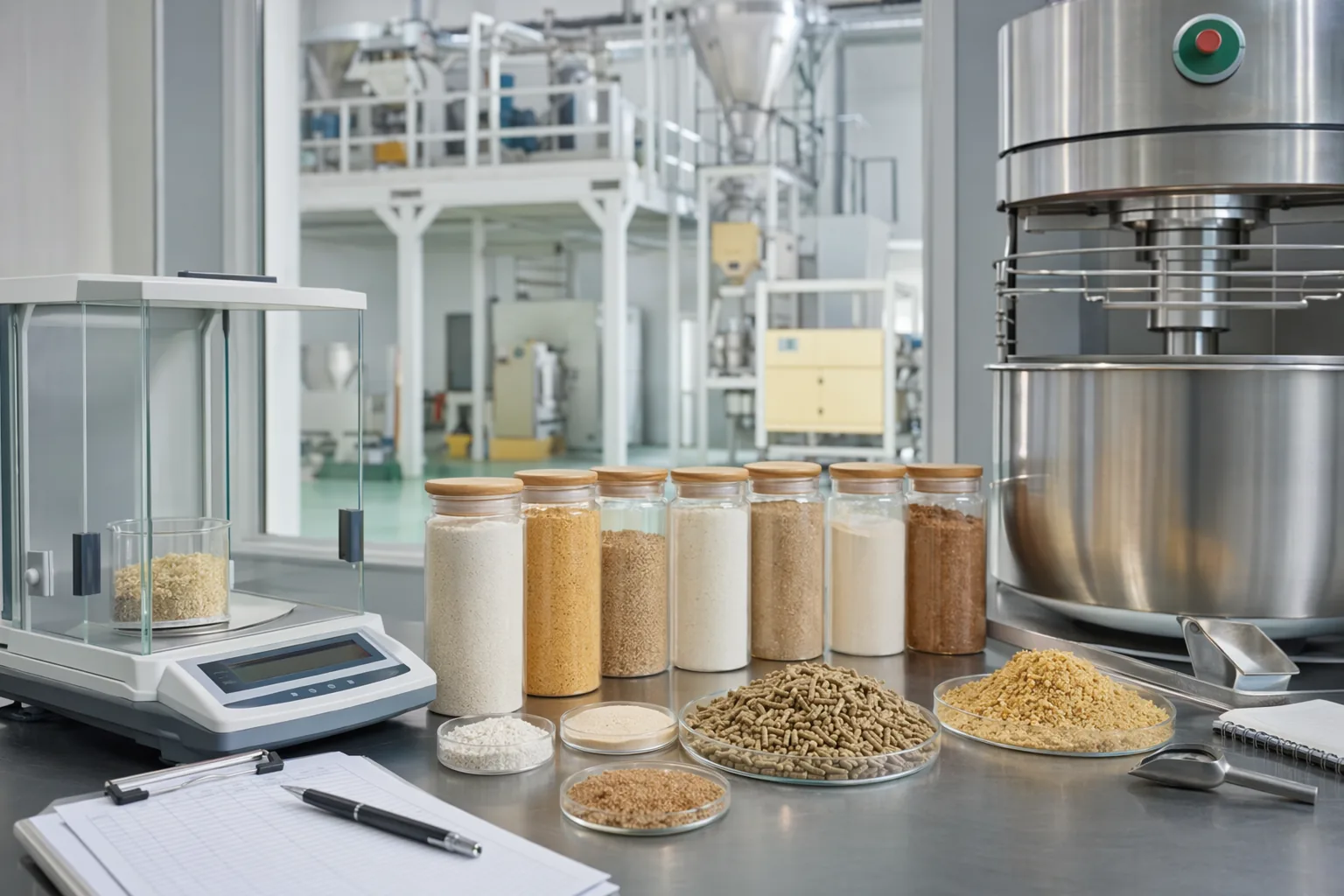
A practical B2B guide for feed mills and premix manufacturers evaluating beta-mannanase enzyme for poultry rations, processing compatibility, quality control, and cost-in-use.
Why Mannanase Matters in Poultry Feed
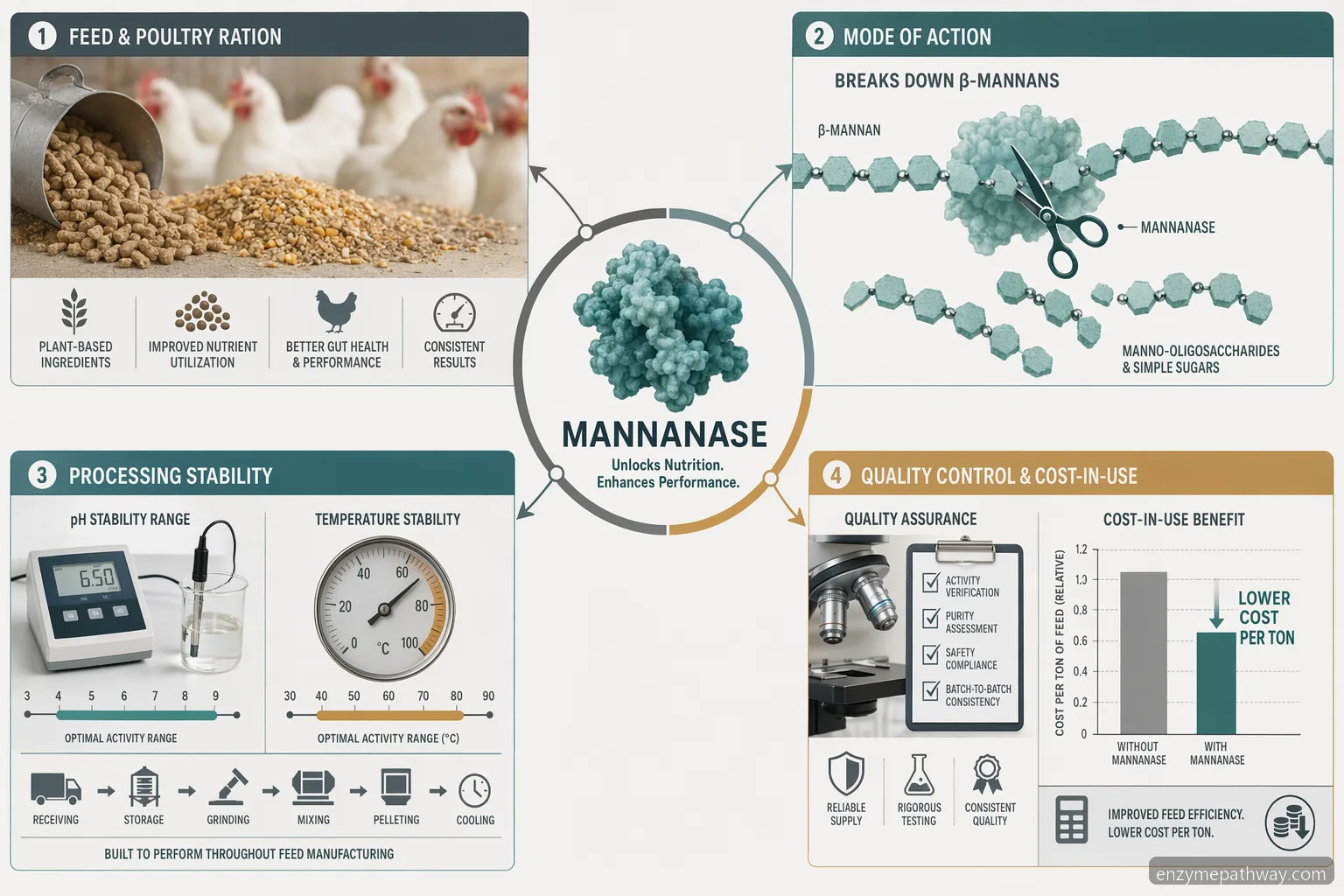
The focus of mannanase enzyme in poultry feed is the controlled breakdown of beta-mannan non-starch polysaccharides that can be present in soybean meal, guar by-products, copra meal, palm kernel meal, and some legume ingredients. These carbohydrates may increase digesta viscosity and can reduce the consistency of nutrient utilization, especially when raw material quality varies by origin or season. For formulators, mannanase is not a general replacement for good raw material control; it is a targeted enzyme tool used when the diet contains meaningful mannan substrate. A beta mannanase enzyme should therefore be evaluated against the actual ingredient matrix, not only against a brochure dose. Industrial mannanase enzyme animal feed programs usually start by mapping substrate risk, feed form, pelleting conditions, and expected return per metric ton of complete feed.
Best suited for diets containing detectable beta-mannan substrates. • Commonly evaluated in broiler, layer, breeder, and turkey formulations. • Most useful when linked to ingredient variability and feed cost objectives.
Selecting the Right Activity Profile
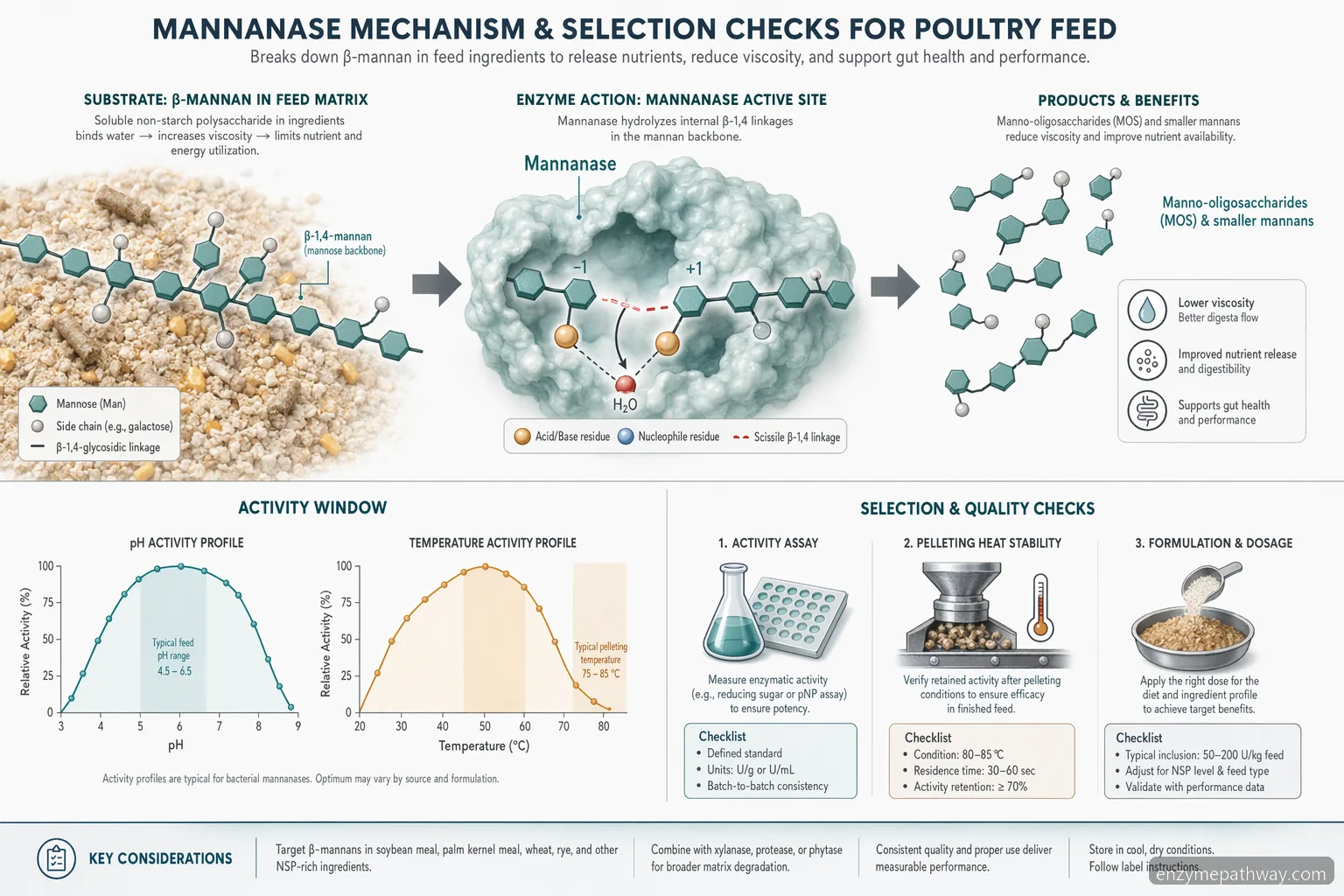
A mannanase enzyme for animal feed should be selected for activity under poultry gastrointestinal and feed manufacturing conditions. Many commercial beta-mannanase products are designed to perform near mildly acidic to neutral pH ranges, often around pH 4.5 to 7.0, but the relevant working range must be confirmed on the supplier TDS. Temperature behavior is equally important. Enzyme activity may be measured at controlled laboratory temperatures, while pelleting can expose feed to 75 to 90 degrees C or higher for short periods. Coated or thermostable granules may improve post-pellet recovery, but this must be proven with your conditioning time, moisture, and die setup. Liquid mannanase may fit post-pellet application or mash feed systems, provided spraying uniformity and microbial control are managed. Do not assume a mannanase enzyme laundry or detergent-grade profile is suitable for animal feed use; feed-grade documentation and carriers are essential.
Check declared activity units and assay conditions. • Confirm pH activity range relevant to poultry digestion. • Measure enzyme recovery after actual pelleting. • Verify carrier suitability for feed use.
Dosage Strategy for Feed Formulation
There is no single universal inclusion rate for mannanase in poultry feed because declared activity units, product concentration, substrate levels, and formulation goals differ. As a practical screening band, feed mills often evaluate enzyme additions in the low grams-per-metric-ton range for concentrated dry products or higher inclusion for diluted premixes, always according to supplier directions. A formulation trial should compare at least one standard dose with a higher or lower bracket to identify the economic response curve. If the matrix value is assigned, document which nutrients or energy credits are being taken and under what ingredient assumptions. For premix manufacturers, dilution accuracy, mixer coefficient of variation, and compatibility with organic acids, minerals, choline chloride, and coccidiostats should be checked. The goal is not maximum enzyme addition; it is the lowest reliable cost-in-use that delivers the targeted formulation benefit.
Use supplier activity units, not only product weight. • Run dose-response work before assigning matrix values. • Confirm premix uniformity and shelf stability. • Avoid over-formulation without measurable economic return.
Processing, Stability, and QC Checks
Quality control for mannanase enzyme starts before the product reaches the mixer. Each batch should be supplied with a COA showing activity, lot number, manufacture date, retest or expiry date, and relevant microbiological or contaminant limits where applicable. The TDS should explain assay method, recommended storage, pH and temperature profile, and application guidance. The SDS should be reviewed for handling controls because enzyme powders can be respiratory sensitizers if dust is not managed. In production, verify weighing accuracy, premix distribution, and storage conditions, typically cool and dry with sealed packaging. For pelleted feed, take paired mash and pellet samples to estimate enzyme recovery. If using liquid application, document dilution water quality, tank hygiene, nozzle performance, and spray rate. A retention sample program helps troubleshoot activity loss, supplier variation, or processing deviations.
Request COA, TDS, SDS, and lot traceability. • Test mash-to-pellet enzyme recovery. • Control dust exposure and operator handling. • Keep retained samples for investigation.
Supplier Qualification and Cost-in-Use
A qualified mannanase enzyme supplier for animal feed should support formulation work with more than a price per kilogram. Buyers should compare activity delivered per metric ton of feed, storage stability, pelleting recovery, documentation quality, lead time, packaging, technical support, and complaint response. Ask whether the supplier can provide a representative sample for pilot validation, the full activity assay protocol, and guidance for local laboratory verification. Cost-in-use should include target dose, expected recovery after processing, freight, premix dilution cost, inventory life, and any formulation matrix value being applied. For high-volume poultry operations, a small difference in enzyme recovery or assay strength can materially change delivered cost. Supplier approval should be based on batch consistency, transparent specifications, and performance in your feed mill and diet system, not on generic claims.
Compare delivered enzyme activity, not only unit price. • Run pilot validation before contract approval. • Include freight, dilution, recovery, and shelf life in cost models. • Require transparent specifications and batch consistency.
Technical Buying Checklist
Buyer Questions
Mannanase enzyme is used to hydrolyze beta-mannan carbohydrates found in ingredients such as soybean meal, guar meal, copra meal, and palm kernel meal. In poultry feed formulation, the objective is to improve consistency of nutrient utilization and manage ingredient variability. It should be applied based on substrate presence, product activity, feed processing conditions, and validated cost-in-use, not as a generic additive.
Start with the supplier’s declared activity units and recommended inclusion range, then adjust through pilot validation using your own diet, raw materials, and process conditions. Compare at least two dose levels against a control, and measure feed manufacturing recovery if pelleting is used. The final dose should reflect substrate load, expected economic response, and delivered enzyme activity per metric ton of feed.
Survival depends on enzyme form, coating technology, conditioning temperature, residence time, moisture, and mechanical stress. Some dry granular products are designed for better thermostability, while liquids may be used after pelleting. The only reliable approach is to test enzyme activity in mash and finished pellets produced under normal mill settings, then include actual recovery in formulation and cost calculations.
Buyers should request a current COA, TDS, SDS, activity assay method, storage requirements, carrier information, batch traceability, and shelf-life guidance. For approval, also ask for representative samples, technical support for pilot trials, and documentation of product specifications. These documents help confirm suitability for animal feed, handling requirements, and consistency before the enzyme enters routine purchasing.
No, a mannanase enzyme laundry or detergent product should not be assumed suitable for animal feed. Detergent enzymes may use different carriers, stabilizers, specifications, and intended handling conditions. Poultry formulations require feed-grade documentation, suitable excipients, clear safety data, and quality controls aligned with feed manufacturing. Always qualify a dedicated mannanase enzyme for animal feed before use.
Mannanase for Research & Industry
Need Mannanase for your lab or production process?
ISO 9001 certified · Food-grade & research-grade · Ships to 80+ countries
Frequently Asked Questions
What is mannanase enzyme used for in poultry feed?
Mannanase enzyme is used to hydrolyze beta-mannan carbohydrates found in ingredients such as soybean meal, guar meal, copra meal, and palm kernel meal. In poultry feed formulation, the objective is to improve consistency of nutrient utilization and manage ingredient variability. It should be applied based on substrate presence, product activity, feed processing conditions, and validated cost-in-use, not as a generic additive.
How should a feed mill choose the right mannanase dose?
Start with the supplier’s declared activity units and recommended inclusion range, then adjust through pilot validation using your own diet, raw materials, and process conditions. Compare at least two dose levels against a control, and measure feed manufacturing recovery if pelleting is used. The final dose should reflect substrate load, expected economic response, and delivered enzyme activity per metric ton of feed.
Can mannanase survive poultry feed pelleting?
Survival depends on enzyme form, coating technology, conditioning temperature, residence time, moisture, and mechanical stress. Some dry granular products are designed for better thermostability, while liquids may be used after pelleting. The only reliable approach is to test enzyme activity in mash and finished pellets produced under normal mill settings, then include actual recovery in formulation and cost calculations.
What documents should buyers request from a mannanase enzyme supplier?
Buyers should request a current COA, TDS, SDS, activity assay method, storage requirements, carrier information, batch traceability, and shelf-life guidance. For approval, also ask for representative samples, technical support for pilot trials, and documentation of product specifications. These documents help confirm suitability for animal feed, handling requirements, and consistency before the enzyme enters routine purchasing.
Is detergent or laundry mannanase suitable for animal feed?
No, a mannanase enzyme laundry or detergent product should not be assumed suitable for animal feed. Detergent enzymes may use different carriers, stabilizers, specifications, and intended handling conditions. Poultry formulations require feed-grade documentation, suitable excipients, clear safety data, and quality controls aligned with feed manufacturing. Always qualify a dedicated mannanase enzyme for animal feed before use.
Related: Mannanase for Mannan-Rich Process Streams
Turn This Guide Into a Supplier Brief Request a feed-grade mannanase enzyme specification review, pilot sample, and cost-in-use assessment for your poultry formulation. See our application page for Mannanase for Mannan-Rich Process Streams at /applications/mannanase-industrial-processing/ for specs, MOQ, and a free 50 g sample.
Contact Us to Contribute