Detergent Mannanase Specification Checklist for Buyers
9-point spec checklist for detergent mannanase: pH 8-11, activity (U/g), format, QC, dosage, cost-in-use. Download COA, TDS, SDS or request a 50 g sample.
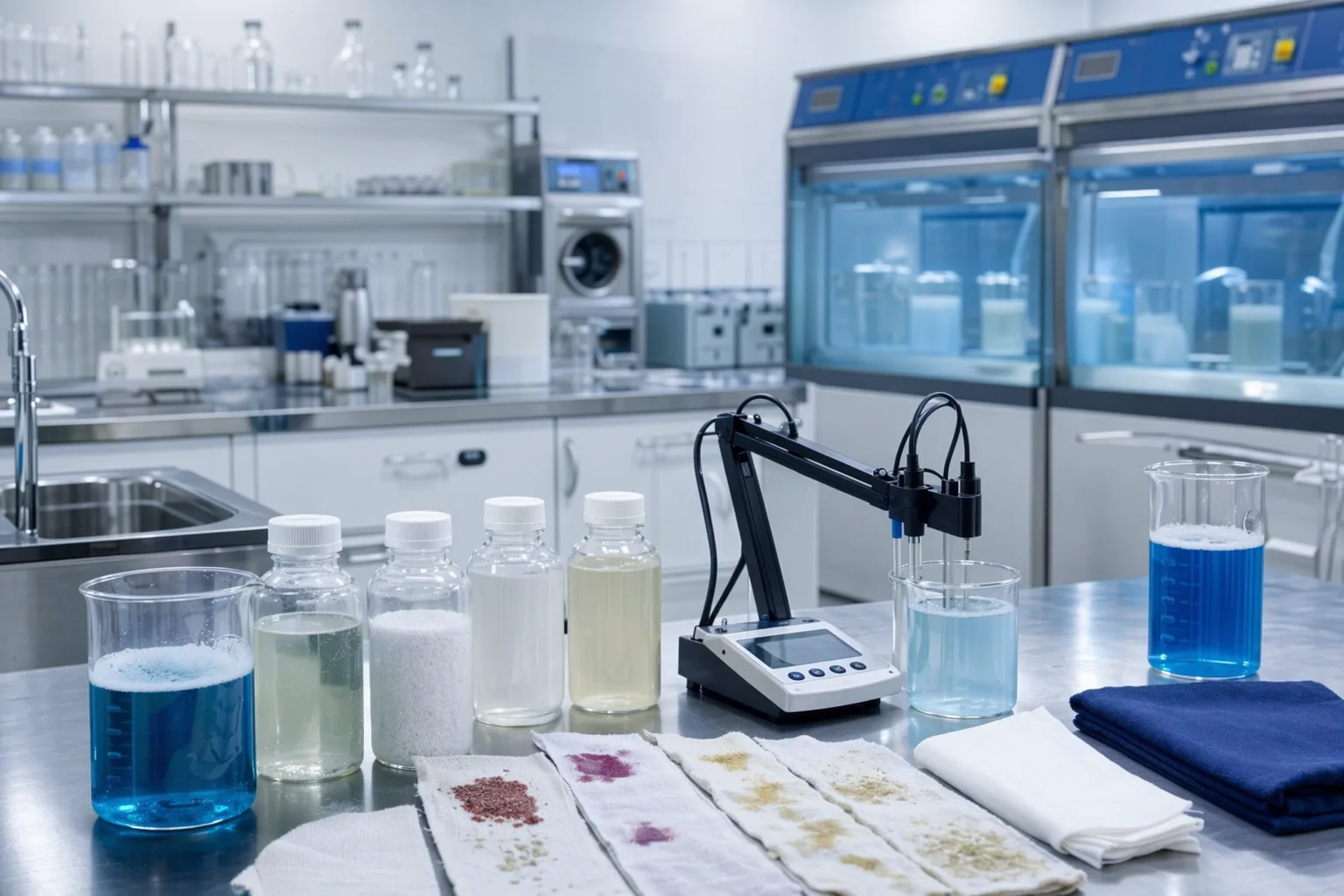
A practical B2B guide for comparing mannanase enzyme options in laundry and cleaning formulations, with specification points that affect stain removal, stability, dosing, and cost-in-use.
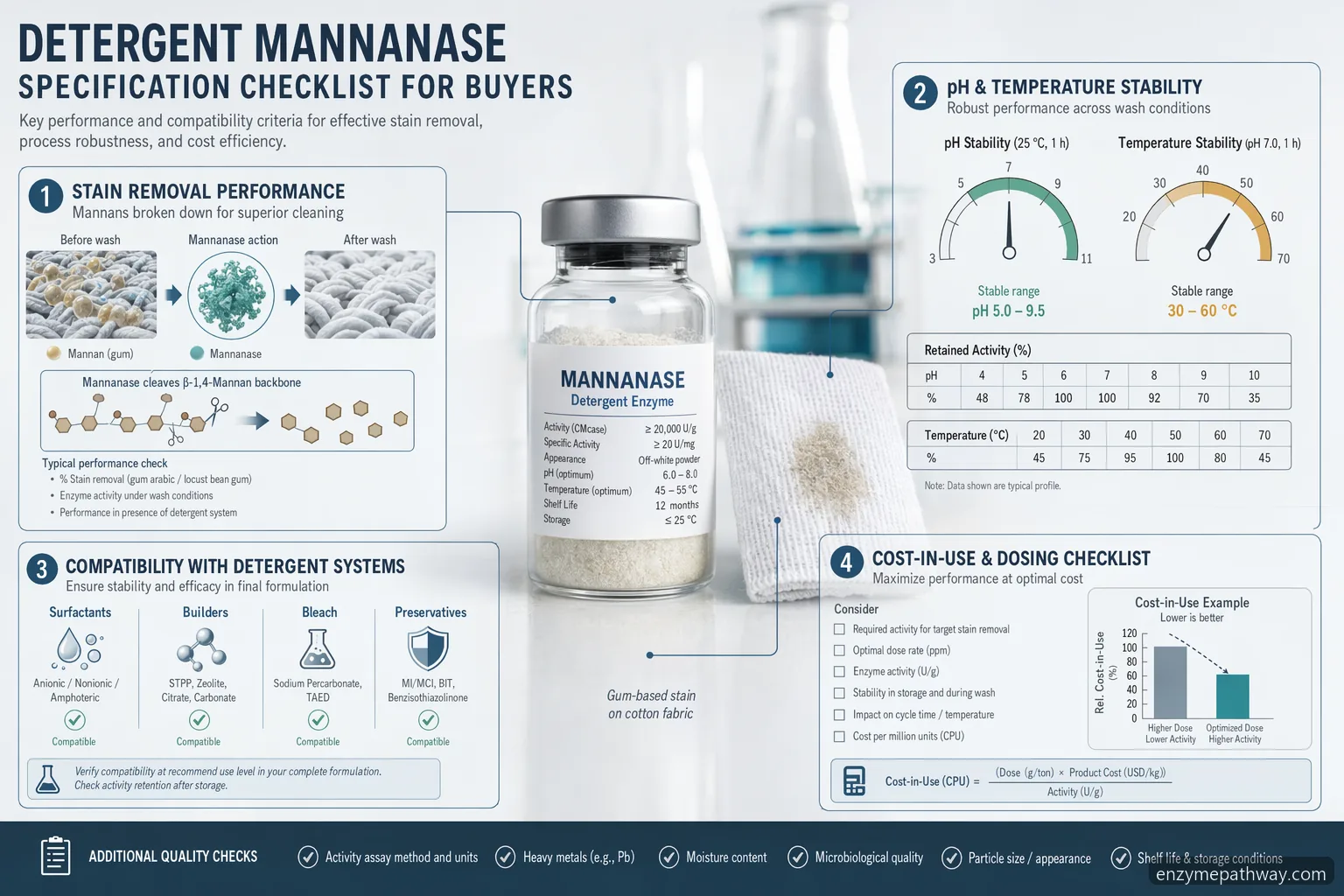
Why Mannanase Matters in Laundry Detergent
Mannanase is used in detergent to hydrolyze beta-mannan gums found in common food, cosmetic, and personal-care soils. In laundry, these polysaccharides can bind particulate dirt and contribute to visible residues, especially on cotton and blended fabrics. A detergent mannanase helps break the mannan backbone into smaller soluble fragments, supporting stain removal under typical wash conditions. For formulators, the purchase decision is not simply whether a mannanase enzyme works in a laboratory buffer. The key comparison is whether the enzyme remains active in the finished powder or liquid detergent, survives storage, and performs in the presence of builders, surfactants, chelants, preservatives, fragrances, and bleaching systems. Buyers should review the enzyme source, activity declaration, carrier system, and recommended handling conditions. The best-fit product is usually the one that provides reliable performance at the lowest cost-in-use in the specific detergent matrix.
Target soils: guar, locust bean, and other beta-mannan gums • Typical application: laundry powders, liquids, gels, and unit-dose formats • Buyer focus: stability, compatibility, performance, and supply reliability
Core Specification Points to Compare
When comparing mannanase in detergent, start with operating pH and temperature. Many detergent systems operate in the mildly alkaline to alkaline range, commonly around pH 7.5 to 11.0 in wash liquor, though actual finished product pH may differ. A useful beta-mannanase should show practical activity across the intended wash profile, often from 20 to 60 °C depending on market habits and machine settings. Activity units must be interpreted with the supplier’s assay method because substrate, pH, temperature, and reaction time can change the reported number. Buyers should also compare liquid versus granulated formats. Liquids may suit enzyme blends and automated dosing, while coated granules are often selected for dry detergents to improve dust control and storage behavior. Request data on residual activity after storage in representative detergent bases, not only enzyme concentrate stability.
Check activity method conditions before comparing unit prices • Confirm pH activity profile against target wash liquor • Review storage stability in the actual formulation type • Match liquid or granular format to the detergent process
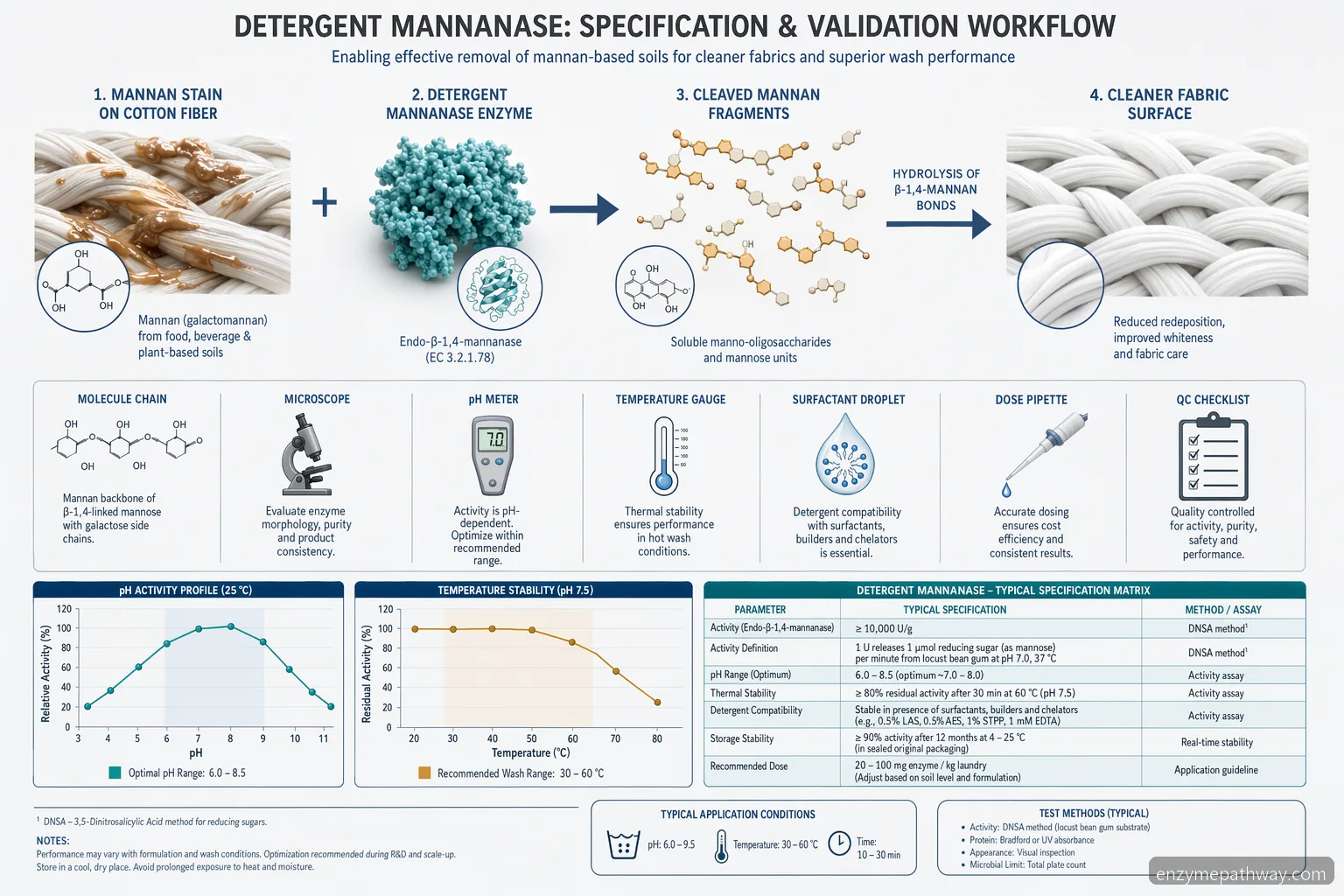
Compatibility With Detergent Ingredients
The use of mannanase enzyme in detergent depends heavily on formulation compatibility. Surfactants, builders, solvents, preservatives, optical brighteners, dyes, perfumes, and salts can influence enzyme stability. Oxidizing bleach systems and high alkalinity may require special formulation strategies or physical separation. If the product includes multiple enzymes, such as protease, amylase, lipase, cellulase, or pectinase, test the full blend because proteolytic degradation and pH drift can reduce delivered mannanase activity. For liquid detergents, water activity, calcium availability, preservative choice, and viscosity modifiers can affect shelf life. For powders, drying temperature, moisture pickup, granule coating quality, and segregation during handling matter. A supplier should provide technical guidance on recommended addition points, maximum exposure temperatures, and incompatible ingredients. Do not rely on generic statements that a mannanase enzyme is detergent grade; validate it in the target formula.
Test compatibility with the complete detergent matrix • Assess enzyme blend interactions, especially with protease • Monitor residual activity after accelerated and ambient storage • Evaluate dusting, segregation, and dissolution for granules
Pilot Validation and QC Checklist
Before commercial approval, run pilot validation under the same process conditions planned for production. For liquids, add detergent mannanase at the proposed stage and mixing temperature, then check pH, viscosity, phase stability, odor impact, microbial control, and residual activity over time. For powders, evaluate post-dosing or spray conditions, granule integrity, dust control, bulk density, and dissolution. Typical trial dosage may begin in a broad screening band such as 0.01% to 0.30% enzyme preparation by finished detergent weight, then narrow based on activity strength, wash performance, and economics. QC should include incoming COA verification, activity testing or agreed surrogate checks, appearance, moisture for granules, density or viscosity, and retained sample monitoring. Ask the supplier for the TDS, SDS, COA template, recommended assay, shelf-life basis, and handling instructions for occupational exposure control.
Screen dosage by enzyme preparation weight and delivered activity • Use representative stained fabric or soil-panel methods • Track residual activity through accelerated and real-time storage • Keep retained samples from pilot and production batches
Cost-in-Use and Supplier Qualification
For comparison purchases, the lowest price per kilogram is rarely the safest decision. Cost-in-use for mannanase use detergent projects should include delivered activity, dosage required to meet performance targets, stability loss during storage, production yield, waste, freight, lead time, packaging, and technical service. Supplier qualification should review manufacturing consistency, batch-to-batch activity variation, change-control communication, documentation quality, complaint handling, and ability to support pilot troubleshooting. Buyers should request recent COA examples, TDS, SDS, allergen and enzyme dust handling guidance, recommended storage conditions, and clear shelf-life statements. If multiple candidates perform similarly, prioritize the supplier that can explain assay methodology, formulation constraints, and scale-up risks. A structured comparison reduces reformulation delays and helps procurement, R&D, QA, and production agree on a detergent mannanase specification that is commercially workable.
Compare cost per effective wash, not only cost per kilogram • Review documentation completeness before plant trials • Confirm lead time, packaging size, and batch consistency • Require notification for material or process changes
Technical Buying Checklist
Buyer Questions
Detergent mannanase is used to break down beta-mannan gums that can occur in food, personal-care, and cosmetic stains. These gums may bind soils to fabric and contribute to dullness or residue. In a laundry formulation, mannanase enzyme supports removal of mannan-containing stains under suitable wash pH and temperature. Performance must be validated in the finished detergent matrix, not only in a laboratory buffer.
Buyers should compare activity method, pH profile, temperature profile, formulation stability, format, dosage requirement, and supplier documentation. A high activity number is not enough because assay conditions vary by supplier. The practical comparison is cost-in-use after storage and washing performance in the target formula. Request COA, TDS, SDS, recommended handling conditions, and pilot guidance before selecting a commercial source.
Many laundry detergents work in mildly alkaline to alkaline wash liquor, often around pH 7.5 to 11.0, while wash temperatures may range from about 20 to 60 °C depending on the market and program. The correct range depends on the specific mannanase and formulation. Buyers should request activity and stability data at relevant pH, temperature, surfactant, and builder conditions.
A practical pilot screen may start around 0.01% to 0.30% enzyme preparation by finished detergent weight, adjusted for the supplier’s declared activity and the stain-removal target. The final dosage should be based on wash tests, residual activity after storage, and cost-in-use. Avoid transferring dosage directly between suppliers unless activity methods and formulation stability are comparable.
A qualified supplier should provide a certificate of analysis, technical data sheet, safety data sheet, activity unit definition, recommended storage conditions, shelf-life basis, and handling instructions. For production approval, buyers may also request sample COAs from recent batches, packaging details, change-control expectations, and technical support for pilot validation. Documentation quality is an important part of supplier qualification.
Mannanase for Research & Industry
Need Mannanase for your lab or production process?
ISO 9001 certified · Food-grade & research-grade · Ships to 80+ countries
Frequently Asked Questions
What is detergent mannanase used for?
Detergent mannanase is used to break down beta-mannan gums that can occur in food, personal-care, and cosmetic stains. These gums may bind soils to fabric and contribute to dullness or residue. In a laundry formulation, mannanase enzyme supports removal of mannan-containing stains under suitable wash pH and temperature. Performance must be validated in the finished detergent matrix, not only in a laboratory buffer.
How should buyers compare mannanase enzyme in detergent?
Buyers should compare activity method, pH profile, temperature profile, formulation stability, format, dosage requirement, and supplier documentation. A high activity number is not enough because assay conditions vary by supplier. The practical comparison is cost-in-use after storage and washing performance in the target formula. Request COA, TDS, SDS, recommended handling conditions, and pilot guidance before selecting a commercial source.
What pH and temperature ranges are typical for mannanase in laundry detergent?
Many laundry detergents work in mildly alkaline to alkaline wash liquor, often around pH 7.5 to 11.0, while wash temperatures may range from about 20 to 60 °C depending on the market and program. The correct range depends on the specific mannanase and formulation. Buyers should request activity and stability data at relevant pH, temperature, surfactant, and builder conditions.
What dosage of mannanase in detergent should be tested first?
A practical pilot screen may start around 0.01% to 0.30% enzyme preparation by finished detergent weight, adjusted for the supplier’s declared activity and the stain-removal target. The final dosage should be based on wash tests, residual activity after storage, and cost-in-use. Avoid transferring dosage directly between suppliers unless activity methods and formulation stability are comparable.
What documents should a mannanase supplier provide?
A qualified supplier should provide a certificate of analysis, technical data sheet, safety data sheet, activity unit definition, recommended storage conditions, shelf-life basis, and handling instructions. For production approval, buyers may also request sample COAs from recent batches, packaging details, change-control expectations, and technical support for pilot validation. Documentation quality is an important part of supplier qualification.
Related: Mannanase for Mannan-Rich Process Streams
Turn This Guide Into a Supplier Brief Request a detergent mannanase specification review, sample plan, and pilot validation support from EnzymePathway. See our application page for Mannanase for Mannan-Rich Process Streams at /applications/mannanase-industrial-processing/ for specs, MOQ, and a free 50 g sample.
Contact Us to Contribute