Mannanase Supplier Guide for Oil Drilling
Source mannanase for oil drilling fluids: specs, pH/temperature fit, dosage, QC, COA/TDS/SDS, pilot validation, and supplier qualification.
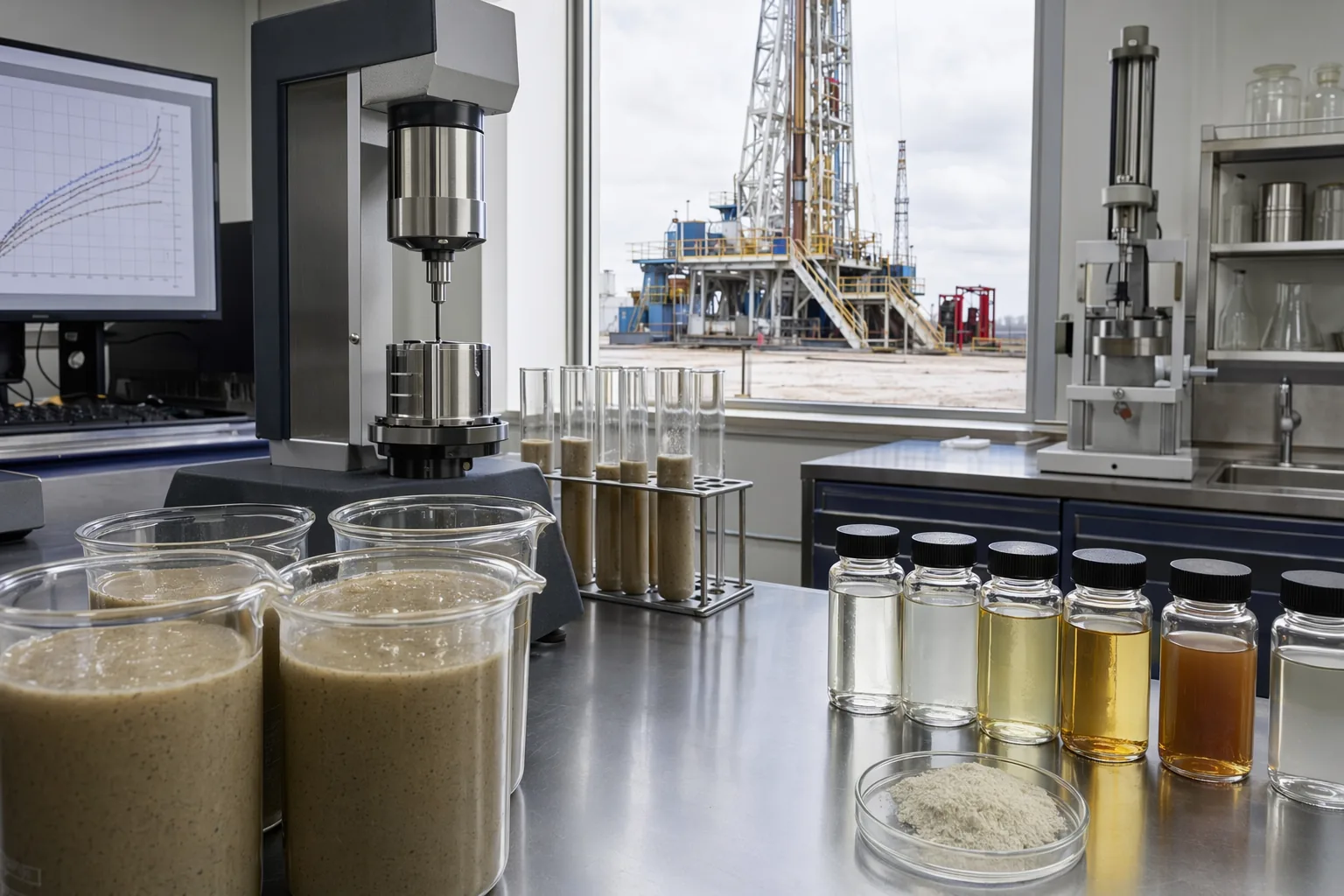
A practical buyer-focused guide to selecting a mannanase enzyme for guar-based drilling fluids, filter-cake cleanup, and viscosity control.
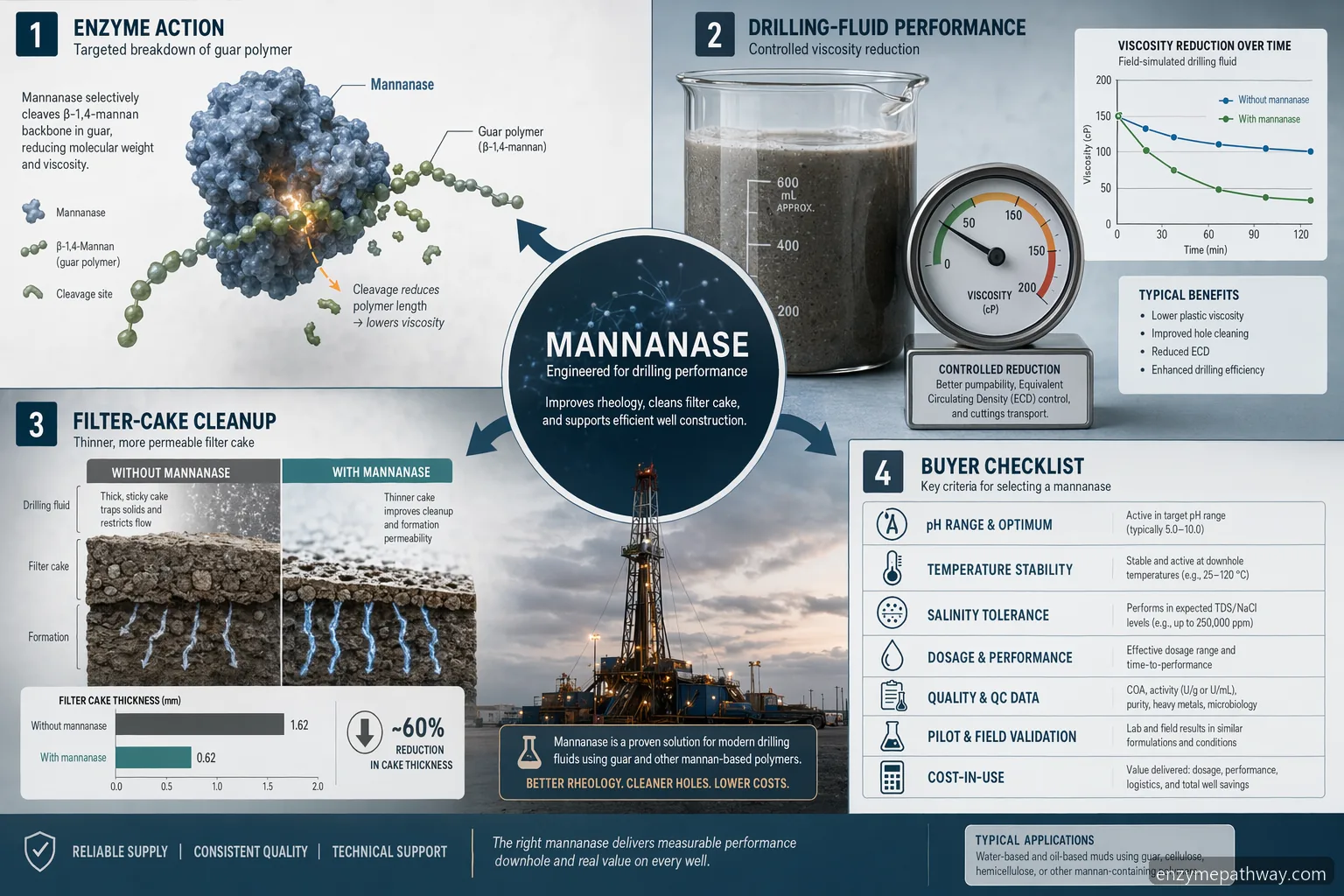
What Is Mannanase in Oil Drilling?
Mannanase, also written as beta mannanase or beta-mannanase, is an industrial hydrolase used to cleave beta-1,4-mannan linkages in galactomannan polymers. In oil drilling and well-service applications, the mannanase enzyme is mainly evaluated for reducing viscosity and degrading guar-based residues in fluids, filter cakes, and near-wellbore zones. The same enzyme class may be discussed in animal feed, coffee processing, or mannanase in laundry detergent, but oilfield selection requires different performance criteria. Buyers should focus on enzyme activity under the actual field matrix: brine chemistry, polymer substitution, shear history, pH, temperature, and contact time. A suitable beta mannanase enzyme should offer predictable polymer breakdown without creating handling issues or conflicting with corrosion inhibitors, biocides, surfactants, scale-control agents, or fluid-loss additives. For B2B purchasing, the core question is not only what is mannanase, but whether a specific product performs reliably in your fluid design.
Primary target: guar, hydroxypropyl guar, and related galactomannans • Key use: viscosity reduction, residue cleanup, and filter-cake degradation • Selection basis: field matrix performance, not generic enzyme activity alone
Operating Window: pH, Temperature, Salinity, and Dosage
Typical commercial mannanase products for oilfield screening are evaluated across mildly acidic to alkaline systems, often around pH 4.5 to 9.0, with the best activity range depending on the enzyme source and formulation. Temperature screening commonly starts at 25 to 80 °C, while higher-temperature wells require specific thermal-stability data from the supplier. Dosage is application dependent; initial lab work often screens 50 to 500 ppm active formulation or 0.05% to 0.5% by weight on fluid, then narrows the range based on viscosity reduction, residue mass loss, and exposure time. Salinity should be tested using actual make-up water or synthetic brine, because divalent ions and high total dissolved solids can affect polymer conformation and enzyme performance. Buyers should avoid assuming that a guar gum enzyme validated in one basin or mud system will transfer directly to another without a structured compatibility study.
Initial pH screen: approximately 4.5-9.0 • Initial temperature screen: approximately 25-80 °C unless higher stability is documented • Trial dosage band: commonly 50-500 ppm formulation or 0.05%-0.5% by fluid weight • Always test with representative brine and additives
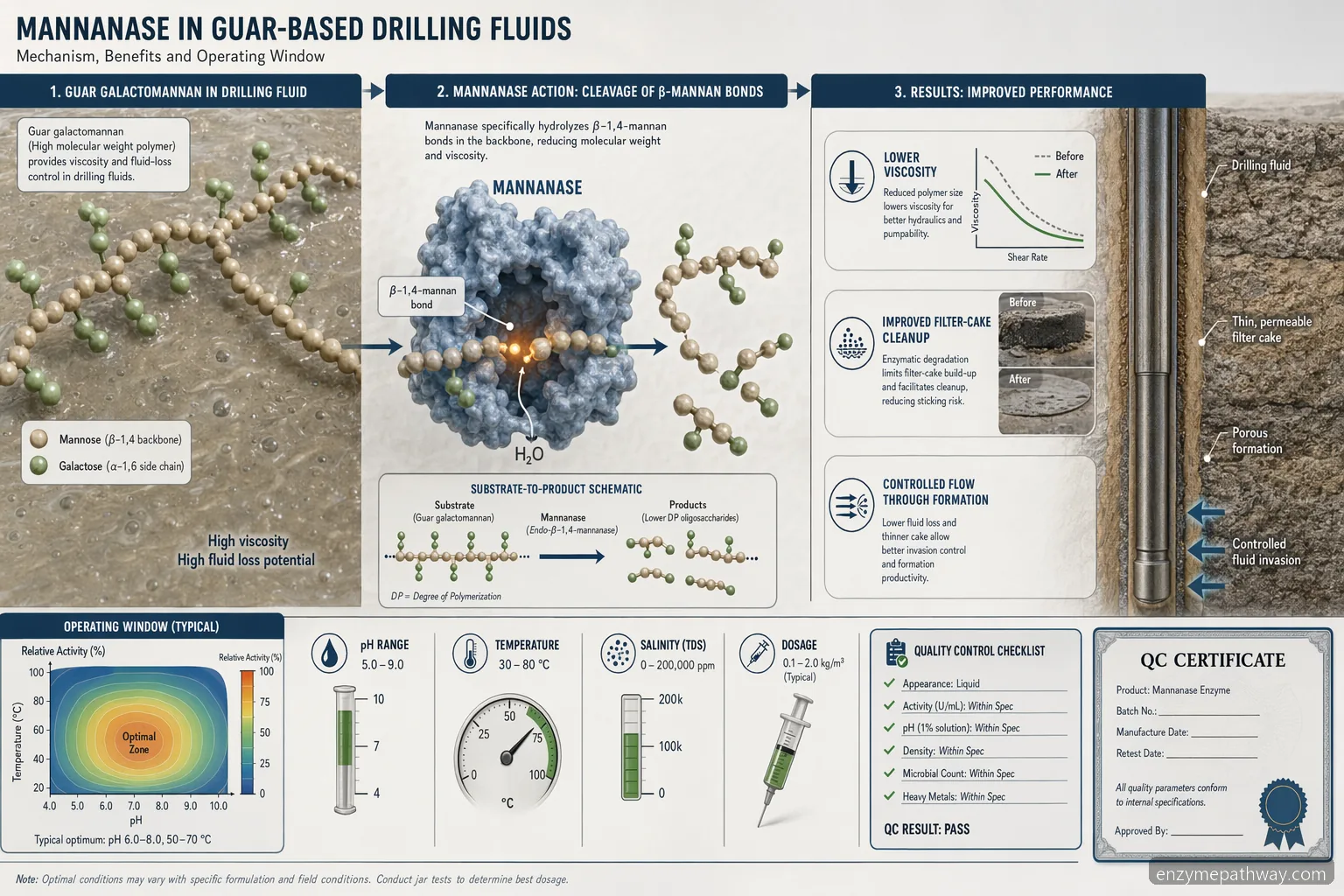
QC Data to Request Before Buying
A qualified mannanase supplier should provide a current COA, TDS, and SDS for each commercial grade under consideration. The COA should state batch number, activity value, activity test method, appearance, moisture or solids where relevant, microbial limits if specified, and recommended storage conditions. The TDS should explain whether the product is liquid or powder, typical pH range, suggested use conditions, dilution guidance, shelf life, and packaging options. The SDS is essential for safe receiving, storage, handling, spill response, and transport review. For procurement, ask whether activity is reported in the supplier’s internal unit or a recognized assay format, and require consistency across quotations. If comparing multiple beta-mannanase products, normalize by delivered activity, formulation concentration, freight, storage requirements, and field dosage. Good QC documentation reduces surprises during scale-up and helps purchasing teams compare suppliers on a technical basis.
Request COA, TDS, SDS, and activity assay description • Confirm batch-to-batch activity tolerance and shelf-life basis • Compare cost per delivered activity unit, not only price per drum • Check packaging, lead time, storage temperature, and handling class
Pilot Validation for Drilling Fluid Compatibility
Before field use, run a controlled pilot using the same base fluid, polymer loading, brine, weighting material, and additive package planned for the job. Establish a blank control without mannanase, then test two or three enzyme dosages at the target pH and temperature. Useful QC checks include Brookfield or Fann viscosity, rheology profile, fluid-loss behavior, residue or filter-cake mass, visual phase stability, and retained activity after thermal exposure. Sampling at multiple time points, such as 1, 4, 8, and 24 hours, helps define whether the enzyme works within the operational residence time. If oxidizers, high pH buffers, biocides, or strong chelants are present, include them in the test matrix. Pilot validation should also confirm that the mannanase enzyme can be stored, metered, and mixed under site conditions without clumping, foaming, separation, or activity loss.
Use representative field fluid, not a simplified lab polymer solution • Include blank, low-dose, mid-dose, and high-dose enzyme conditions • Track viscosity, rheology, residue reduction, and visual compatibility • Measure performance at realistic residence times
Supplier Qualification and Cost-in-Use
For industrial enzyme buyers, supplier qualification should cover technical fit, documentation quality, production consistency, logistics, and commercial responsiveness. Ask for a representative sample, recent COA, typical lead time, minimum order quantity, packaging formats, storage requirements, and change-notification practices. Evaluate whether the supplier can support reformulation if your field conditions shift from low-temperature surface treatment to hotter downhole exposure. Cost-in-use should include enzyme dose, activity stability, dilution losses, freight, storage, disposal considerations, and the value of reduced cleanup time or improved fluid management. A lower-priced beta mannanase may cost more if it requires higher dosage or fails in high-salinity brine. Conversely, a concentrated liquid or stable powder can improve economics when it reduces shipping weight or simplifies dosing. The best supplier discussion is therefore built around performance data, pilot results, and total operating cost.
Qualify the supplier technically and commercially • Calculate cost-in-use from dosage, activity, logistics, and performance • Require sample-lot testing before bulk purchase • Document change control for formulation or manufacturing updates
Technical Buying Checklist
Buyer Questions
Mannanase breaks down mannan-rich polymers, especially guar and modified guar derivatives such as hydroxypropyl guar. These polymers contain beta-1,4-mannan linkages that beta-mannanase can hydrolyze into smaller fragments. In oil drilling, this activity is useful for reducing viscosity, degrading polymer residue, and supporting filter-cake cleanup when the enzyme is compatible with the fluid chemistry and operating conditions.
A mannanase enzyme is substrate-specific compared with many chemical breakers. It is selected to attack galactomannan polymers rather than broadly oxidizing or reacting with multiple fluid components. This can be useful where controlled guar degradation is needed, but performance still depends on pH, temperature, salinity, residence time, and additive compatibility. It should be validated against the exact drilling-fluid formulation before field use.
The enzyme class may be similar, and terms such as mannanase in laundry detergent or mannanase waschmittel refer to detergent applications. However, oil drilling requires separate evaluation because brines, temperatures, polymers, and additives are very different from laundry wash conditions. A detergent-oriented product should not be assumed suitable for drilling unless the supplier provides relevant data and the product passes fluid compatibility testing.
A supplier should provide a COA for the offered batch, a TDS with application and handling guidance, and an SDS for safety review. Buyers should also request the activity assay method, unit definition, shelf-life basis, storage conditions, packaging options, and sample availability. For recurring supply, ask about batch consistency, lead time, change notification, and support for pilot validation.
Compare quotations by cost-in-use, not just unit price. Normalize each mannanase offer by delivered activity, recommended dosage, performance in your pilot test, freight, storage needs, dilution requirements, and packaging efficiency. A higher-concentration or more stable beta mannanase enzyme may be more economical if it reduces dosage, improves reliability, or lowers logistics cost under field conditions.
Mannanase for Research & Industry
Need Mannanase for your lab or production process?
ISO 9001 certified · Food-grade & research-grade · Ships to 80+ countries
Frequently Asked Questions
What does mannanase break down in drilling fluids?
Mannanase breaks down mannan-rich polymers, especially guar and modified guar derivatives such as hydroxypropyl guar. These polymers contain beta-1,4-mannan linkages that beta-mannanase can hydrolyze into smaller fragments. In oil drilling, this activity is useful for reducing viscosity, degrading polymer residue, and supporting filter-cake cleanup when the enzyme is compatible with the fluid chemistry and operating conditions.
How is mannanase different from a general breaker?
A mannanase enzyme is substrate-specific compared with many chemical breakers. It is selected to attack galactomannan polymers rather than broadly oxidizing or reacting with multiple fluid components. This can be useful where controlled guar degradation is needed, but performance still depends on pH, temperature, salinity, residence time, and additive compatibility. It should be validated against the exact drilling-fluid formulation before field use.
Can the same mannanase be used for detergent and oil drilling?
The enzyme class may be similar, and terms such as mannanase in laundry detergent or mannanase waschmittel refer to detergent applications. However, oil drilling requires separate evaluation because brines, temperatures, polymers, and additives are very different from laundry wash conditions. A detergent-oriented product should not be assumed suitable for drilling unless the supplier provides relevant data and the product passes fluid compatibility testing.
What documents should a mannanase supplier provide?
A supplier should provide a COA for the offered batch, a TDS with application and handling guidance, and an SDS for safety review. Buyers should also request the activity assay method, unit definition, shelf-life basis, storage conditions, packaging options, and sample availability. For recurring supply, ask about batch consistency, lead time, change notification, and support for pilot validation.
How should buyers compare mannanase quotations?
Compare quotations by cost-in-use, not just unit price. Normalize each mannanase offer by delivered activity, recommended dosage, performance in your pilot test, freight, storage needs, dilution requirements, and packaging efficiency. A higher-concentration or more stable beta mannanase enzyme may be more economical if it reduces dosage, improves reliability, or lowers logistics cost under field conditions.
Related: Mannanase for Mannan-Rich Process Streams
Turn This Guide Into a Supplier Brief Request a mannanase sample, COA/TDS/SDS review, and pilot-test support for your oil drilling fluid system. See our application page for Mannanase for Mannan-Rich Process Streams at /applications/mannanase-industrial-processing/ for specs, MOQ, and a free 50 g sample.
Contact Us to Contribute